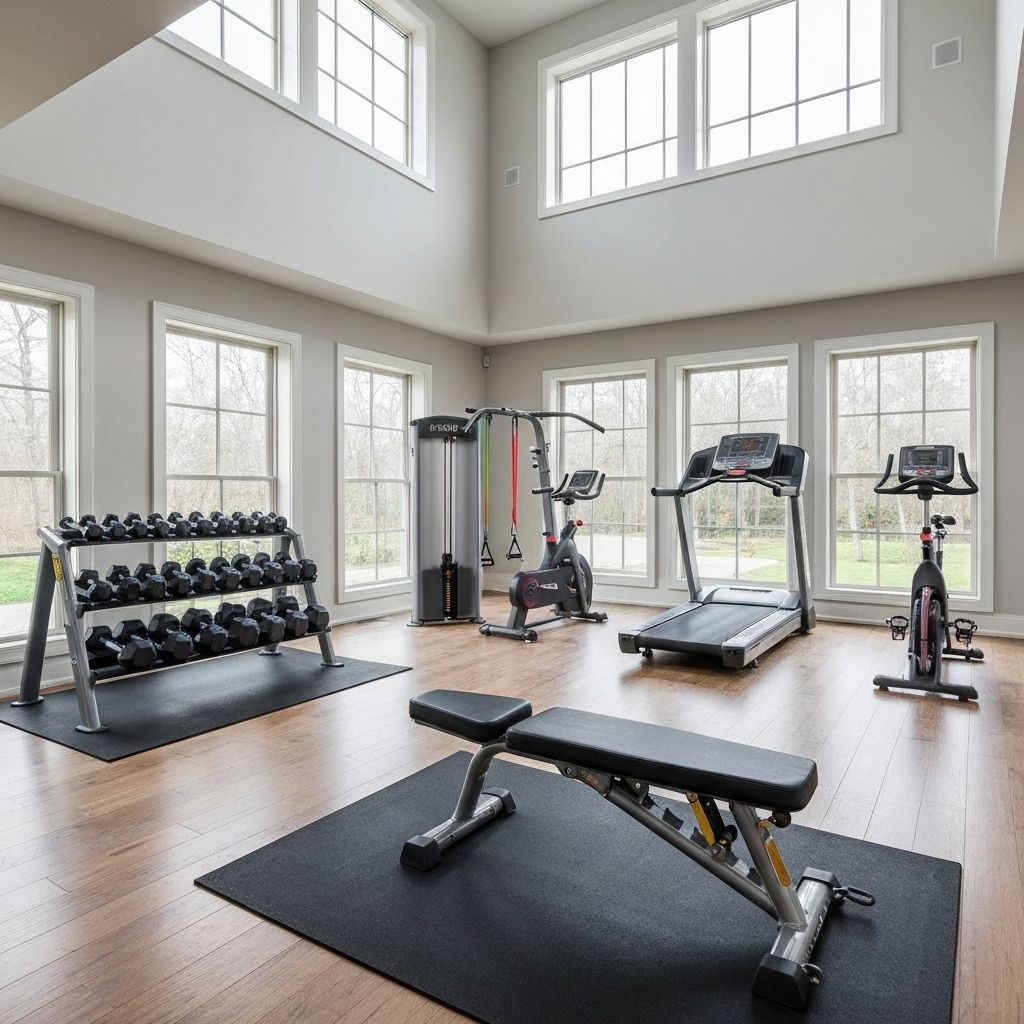
Building a Home Gym on a Budget
Create an effective home workout space without breaking the bank. Here's what you really need.
James Wilson
Author
Key Takeaways
- Comprehensive guide to equipment principles
- Science-backed strategies for optimal results
- Practical tips you can implement immediately
You don't need an expensive gym membership or fancy equipment to get fit. With strategic purchases and smart planning, you can build an effective home gym for under $500. Let's explore what you actually need and what's just marketing hype.
Essential Equipment (Budget: $300-400)
Adjustable Dumbbells ($150-200)
Most versatile piece of equipment
Saves space compared to full dumbbell set
Allows progressive overload
Brands: Bowflex, PowerBlocks, Yes4All
Pull-Up Bar ($30-50)
Doorway or wall-mounted options
Essential for upper body training
Enables multiple exercises
Affordable and durable
Resistance Bands ($20-40)
Lightweight and portable
Great for warm-ups and accessory work
Multiple resistance levels
Excellent for mobility work
Yoga Mat ($20-30)
Provides cushioning for floor exercises
Defines your workout space
Useful for stretching and recovery
Affordable and long-lasting
Bench (Optional but Recommended) ($80-150)
Enables more exercise variations
Adjustable benches offer more options
Allows for incline/decline work
Brands: Marcy, Weider, Bowflex
Nice-to-Have Equipment ($100-200)
Kettlebell ($30-50)
Unique training stimulus
Great for cardio and strength
Versatile for various exercises
Start with 35-50 lbs
Foam Roller ($20-40)
Aids in recovery and mobility
Reduces muscle soreness
Improves flexibility
Affordable self-massage tool
Resistance Loop Bands ($15-30)
Different from tube bands
Great for lower body work
Portable and durable
Multiple resistance levels
Ab Wheel ($15-25)
Excellent core exercise tool
Compact and affordable
Highly effective
Minimal space required
Budget Breakdown
Minimal Setup ($300):
Adjustable dumbbells: $150
Pull-up bar: $40
Resistance bands: $30
Yoga mat: $25
Bench: $55
Moderate Setup ($500):
Add kettlebell: $40
Add foam roller: $30
Add loop bands: $20
Add ab wheel: $20
Space Optimization Tips
1. **Use vertical space:** Wall-mounted pull-up bar, shelving for equipment
2. **Multi-functional equipment:** Choose items that serve multiple purposes
3. **Compact storage:** Use under-bed storage for bands and smaller items
4. **Dedicated area:** Even a corner of a room works well
5. **Good lighting:** Improves motivation and safety
Sample Home Gym Workout
Upper Body Day:
Dumbbell bench press
Pull-ups
Dumbbell rows
Resistance band pull-aparts
Dumbbell curls
Lower Body Day:
Dumbbell goblet squats
Dumbbell deadlifts
Resistance band leg press
Dumbbell lunges
Calf raises
Cardio/Core:
Jump rope (if space allows)
Kettlebell swings
Ab wheel rollouts
Resistance band work
Bodyweight circuits
Money-Saving Tips
Buy used equipment on Facebook Marketplace or Craigslist
Wait for holiday sales (Black Friday, New Year)
Start minimal and add equipment as needed
Invest in quality basics rather than cheap variety
DIY solutions (water jugs as weights, stairs for cardio)
Conclusion
A home gym doesn't require a huge investment. Start with dumbbells, a pull-up bar, and resistance bands. These three items alone enable hundreds of exercises. Add equipment gradually as your needs evolve. Consistency with basic equipment beats sporadic use of fancy machines.
James Wilson
Certified Fitness Expert
James Wilson is a certified fitness professional with over 10 years of experience helping clients achieve their health and fitness goals. Specializing in equipment, they combine scientific knowledge with practical coaching to deliver results.
Share this article
Help others discover this valuable content
Found this helpful?
Subscribe to our newsletter for more fitness insights