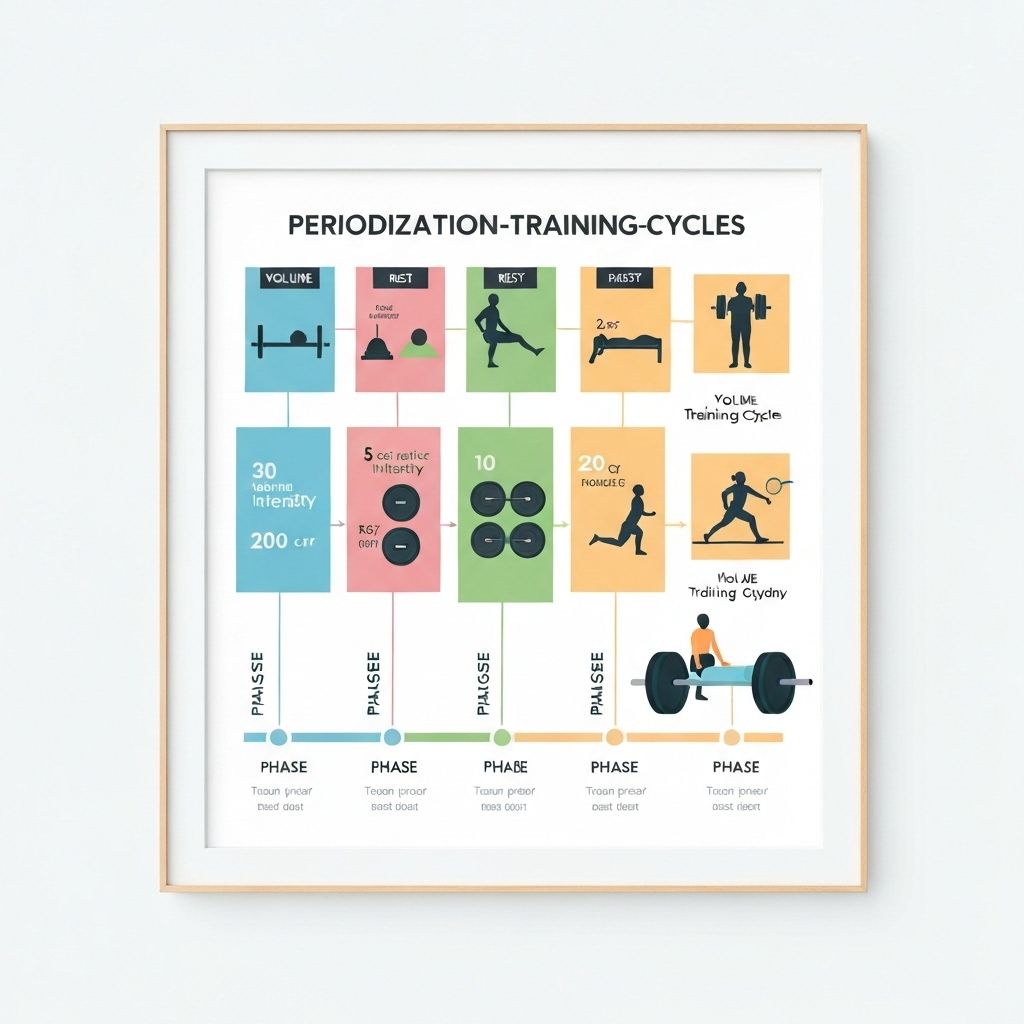
Periodization: Training Smarter, Not Just Harder
Master the art of periodization to maximize gains and prevent overtraining and burnout.
Coach Marcus
Author
Key Takeaways
- Comprehensive guide to training principles
- Science-backed strategies for optimal results
- Practical tips you can implement immediately
Periodization is the strategic organization of training into specific phases, each with different goals, intensities, and volumes. This approach prevents plateaus, reduces injury risk, and optimizes long-term progress. Understanding periodization separates serious athletes from casual gym-goers.
What is Periodization?
Periodization involves dividing your training year into distinct phases, each building on the previous one. Rather than doing the same workout indefinitely, you strategically vary training variables to continuously challenge your body and mind.
Types of Periodization
Linear Periodization
Gradually increases intensity while decreasing volume
Week 1: High reps (12-15), moderate weight
Week 2: Medium reps (8-10), heavier weight
Week 3: Low reps (4-6), heavy weight
Week 4: Deload week (light weight, high reps)
Best for: Strength and muscle building
Undulating Periodization
Varies intensity and volume within each week
Monday: Heavy (4-6 reps)
Wednesday: Moderate (8-10 reps)
Friday: Light (12-15 reps)
Best for: Balanced development and injury prevention
Block Periodization
Focuses on one quality per block (4-6 weeks)
Block 1: Hypertrophy (muscle building)
Block 2: Strength
Block 3: Power
Block 4: Deload
Best for: Advanced athletes and specific goals
Training Phases Explained
Macrocycle (Year-Long Plan)
Overall training year divided into phases
Typically 12-52 weeks
Builds toward peak performance
Mesocycle (4-12 Week Blocks)
Specific training focus
Hypertrophy, strength, power, or endurance
Progressive overload within the phase
Microcycle (Weekly Plan)
Individual workouts and daily training
Varies intensity and volume
Allows for recovery and adaptation
Sample 12-Week Periodized Program
Weeks 1-4: Hypertrophy Phase
Goal: Muscle building
Reps: 8-12 per set
Rest: 60-90 seconds
Volume: Moderate-high
Focus: Controlled movements, mind-muscle connection
Weeks 5-8: Strength Phase
Goal: Build strength foundation
Reps: 4-6 per set
Rest: 2-3 minutes
Volume: Moderate
Focus: Heavy weight, perfect form
Weeks 9-11: Power Phase
Goal: Explosive strength
Reps: 3-5 per set
Rest: 3-5 minutes
Volume: Low
Focus: Speed and explosiveness
Week 12: Deload
Goal: Recovery and adaptation
Reps: 10-15 per set
Rest: 45-60 seconds
Volume: Low
Focus: Active recovery, mobility
Benefits of Periodization
Prevents Plateaus
Continuous variation prevents adaptation
New stimulus promotes continued progress
Keeps training fresh and engaging
Reduces Injury Risk
Deload weeks allow recovery
Varied intensity prevents overuse injuries
Proper progression builds resilience
Optimizes Recovery
Strategic deloads prevent overtraining
Allows nervous system recovery
Improves long-term consistency
Maintains Motivation
Varied training prevents boredom
Clear phases provide direction
Progress tracking shows improvement
Balances Development
Addresses multiple qualities
Prevents imbalances
Creates well-rounded athletes
Deload Weeks: Why They Matter
Deload weeks are strategically lighter training weeks that allow your body to recover and adapt.
Deload Week Guidelines:
Reduce volume by 40-50%
Reduce intensity by 30-40%
Maintain movement patterns
Focus on form and mobility
Every 4-6 weeks
Benefits:
Nervous system recovery
Injury prevention
Hormonal balance restoration
Mental break from intensity
Improved performance after
Common Periodization Mistakes
1. **Not deloading:** Leads to overtraining and burnout
2. **Changing too frequently:** Doesn't allow adaptation
3. **Ignoring individual response:** Everyone adapts differently
4. **Not tracking progress:** Can't assess effectiveness
5. **Rigid adherence:** Flexibility is important
Adjusting Periodization
**If progress stalls:** Increase intensity or change exercise selection
**If feeling fatigued:** Take an extra deload week
**If bored:** Change exercise variations
**If injured:** Modify movements or reduce volume
**If life is stressful:** Reduce training volume
Periodization for Different Goals
Muscle Building (Hypertrophy):
Emphasize 8-12 rep range
Moderate rest periods
Higher volume
Frequent training (3-4x per week per muscle)
Strength Building:
Emphasize 3-6 rep range
Longer rest periods
Lower volume, higher intensity
Adequate recovery between sessions
Fat Loss:
Maintain strength training
Include metabolic conditioning
Moderate calorie deficit
Consistency over intensity
Conclusion
Periodization is not complicated, but it requires planning and consistency. Structure your training into phases, vary intensity and volume strategically, and include deload weeks. This approach prevents plateaus, reduces injury risk, and optimizes long-term progress. Whether you're a beginner or advanced athlete, periodization principles apply to everyone.
Coach Marcus
Certified Fitness Expert
Coach Marcus is a certified fitness professional with over 10 years of experience helping clients achieve their health and fitness goals. Specializing in training, they combine scientific knowledge with practical coaching to deliver results.
Share this article
Help others discover this valuable content
Found this helpful?
Subscribe to our newsletter for more fitness insights